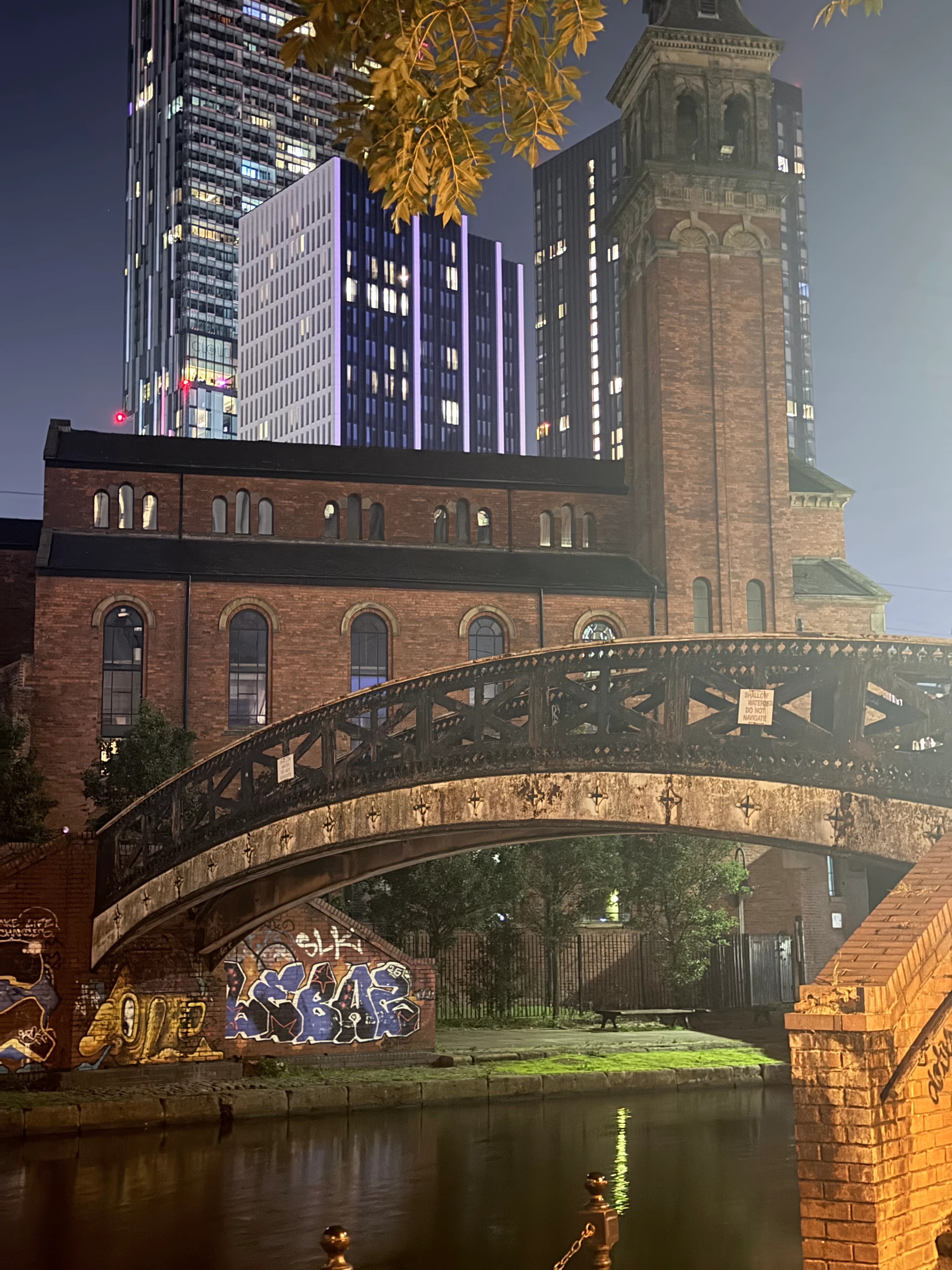
Castlefield is the part of central Manchester where the city’s older layers show. A canal basin, a reconstructed Roman fort and a set of Victorian railway viaducts sit within a few minutes’ walk of each other, with modern towers on the skyline behind them. If you only have part of a day for it, you can see most of what matters on foot, and these are the things to do in Castlefield, Manchester, in a sensible order.
Why Castlefield feels different from the rest of Manchester
Most of central Manchester is shopping streets, big civic buildings and tram lines. Castlefield sits slightly below street level, around water, and traffic noise drops away once you walk down from the road.
The area has layers you can see. The Romans built a fort here, the Bridgewater Canal ended here, and the railways later crossed the basin on tall brick and iron viaducts. Glass towers and new apartments now stand around them. No single building is the main event. The point of Castlefield is the combination, so it suits wandering better than ticking off a venue.
That also sets a limit. If you want a museum, a gallery or a ticketed attraction with a queue and a gift shop, Castlefield is not that. It rewards people who like looking at old things in their setting and then sitting down with a drink.
Getting there and finding your bearings on foot
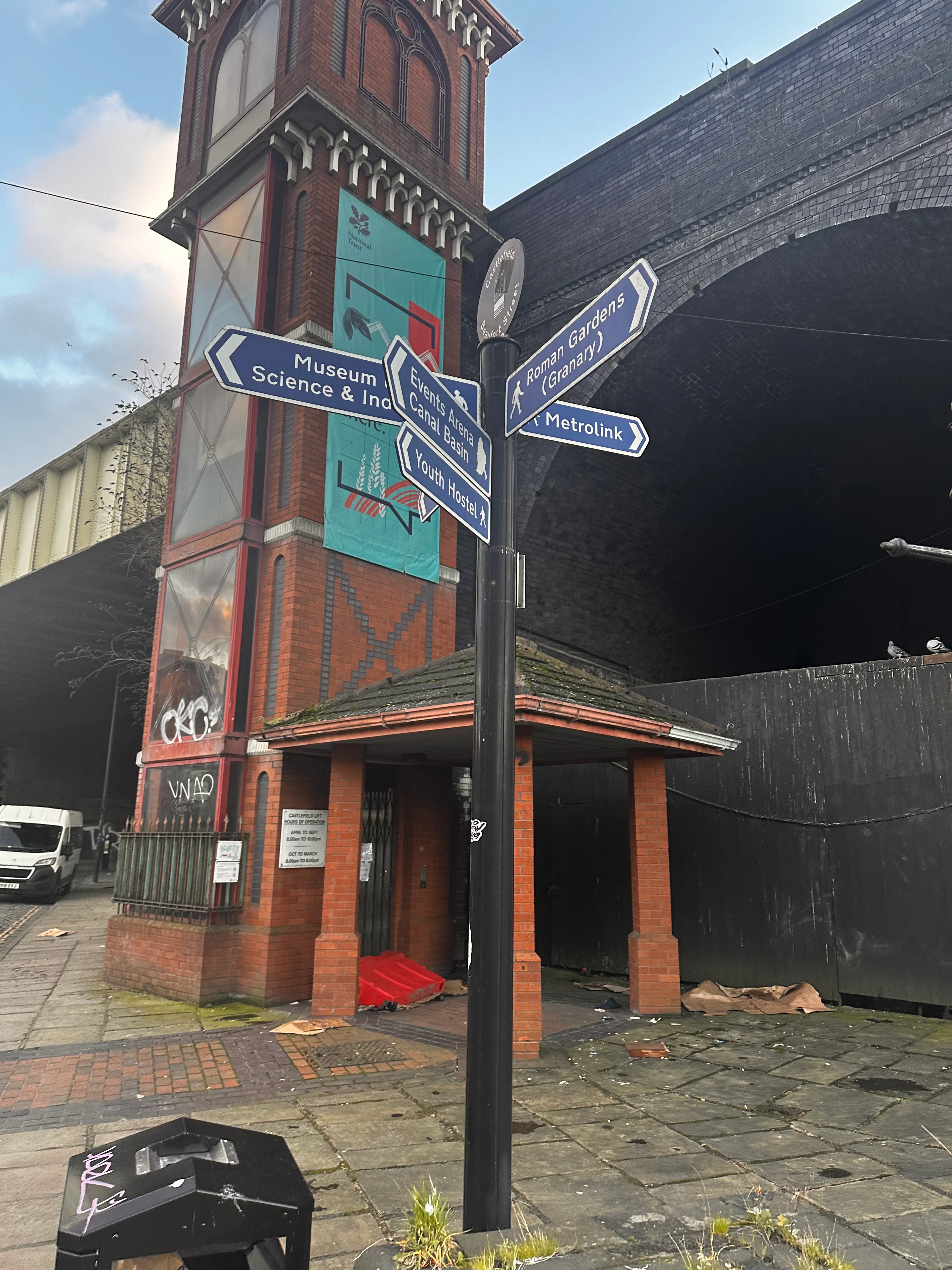
The easiest way in is the Deansgate-Castlefield Metrolink stop, which sits right beside the viaducts. Deansgate railway station is next to it, so if you arrive by train from elsewhere in Greater Manchester you may be a couple of minutes from the basin. From Piccadilly or Victoria you can change onto a tram or walk across the centre.
Walking from the middle of town also works. Head down Deansgate away from Albert Square and the shops, and look for the signs and steps that lead down to the canal. The area is compact, so you cannot get properly lost. The basin is the low point, and the viaducts overhead are your landmarks. Keep the water in sight and you will find the rest.
Two practical points:
- Phone maps sometimes struggle with the stairs and ramps between street level and the towpath, so follow the signs as well.
- Some routes down are steps only. If you are travelling with a pushchair or wheelchair, look for the ramped access points rather than the first staircase you see.
A canal basin walk: the bridges, locks and brick viaducts worth stopping for
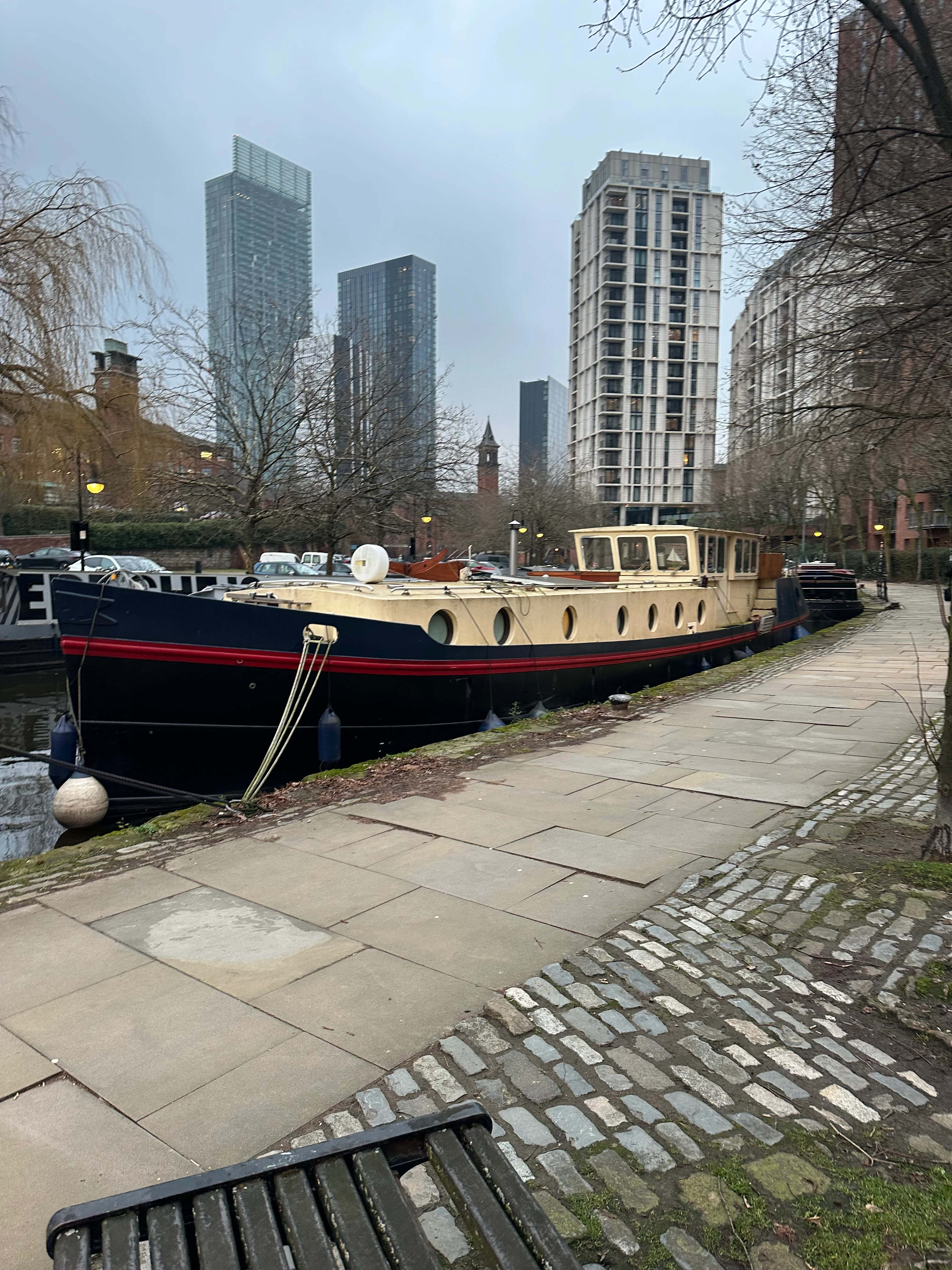
Start at the water and walk slowly. The basin is where the Bridgewater Canal reaches the city, and canal boats are often moored here. The towpaths are paved or cobbled in places, with iron footbridges crossing the water at several points. Crossing one and coming back by another gives you the same view from two angles.
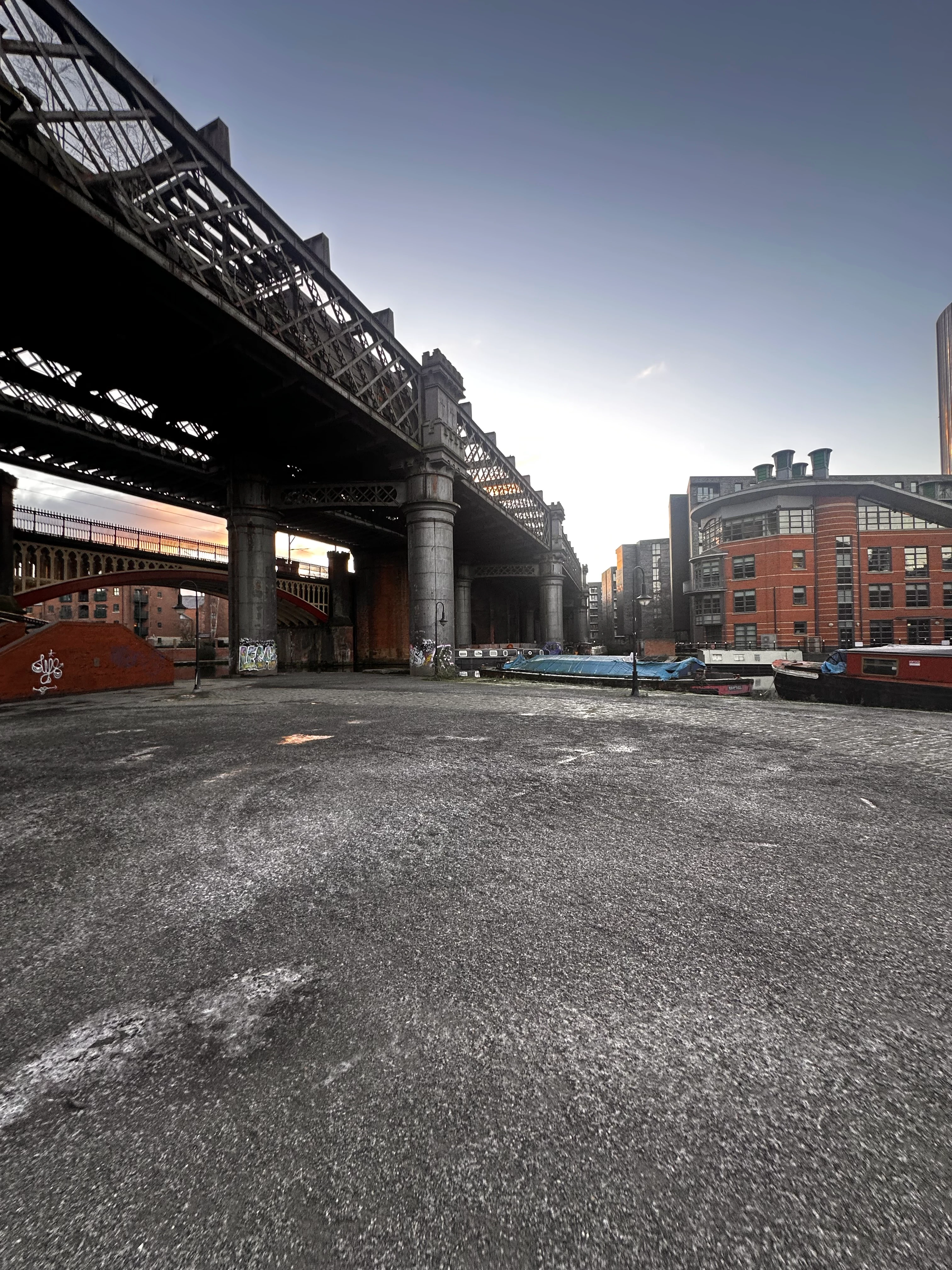
The viaducts are the most striking thing here. They are heavy Victorian structures that carry railway lines high over the basin, and they look best from underneath, where you can see the ironwork and brick up close. Stand on a bridge and look along the canal, and one viaduct frames the next. It is also a good place to take photographs, especially in flat grey light, which suits the brick.
You will also find a few things nearby that are worth a look if you have time:
- Locks and waterside steps. The canal connects with other waterways close by, and small locks and walkways appear as you follow the water.
- Open-air spaces. Castlefield has an outdoor events area, and when something is on there the atmosphere changes noticeably. Check listings before you go if you want to catch an event, and bear in mind that crowds will be larger on those days.
- The elevated viaduct. A section of the old railway viaduct has been turned into a green walkway by the National Trust. Opening arrangements have varied, so check the National Trust’s own pages before you plan around it.
Give the walk 45 minutes to an hour if you are only looking, longer if you stop for photographs or a drink.
The Roman fort and the story of where Manchester began
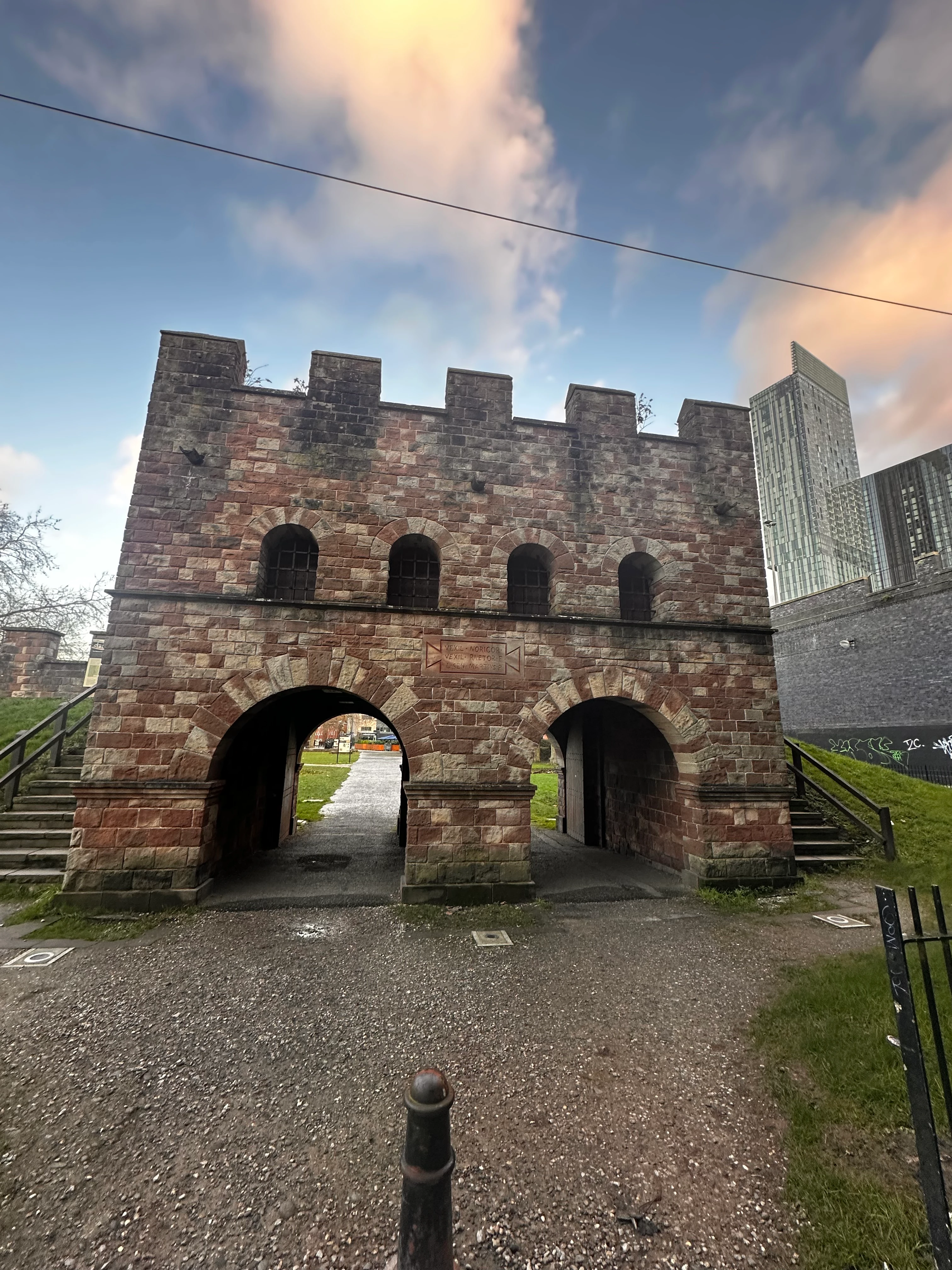
Manchester began here. The Romans built a fort at this spot, and the Latin name Mamucium is the root of the name Manchester. The visible remains are modest, so it helps to know what to expect.
What you see today is a reconstruction. There is a rebuilt gateway and sections of wall, with the footprint of the original fort marked out around them. It is outdoors, you can walk around it freely, and you do not need much time. Ten to fifteen minutes is enough to read the information boards, look at how the gateway was rebuilt and picture the layout.
Do not expect something on the scale of Hadrian’s Wall or a major Roman site. The value is the context: a Roman military outpost stood on this low ground by the river, and a city eventually grew from it. Seeing the fort a short walk from the canal and the viaducts makes that long history easy to follow, because you can see roughly two thousand years of use within one small area.
If the story interests you, the Museum of Science and Industry stands nearby and covers a later chapter, from industrial Manchester and its railways. It is a proper attraction, so treat it as a separate visit rather than something to squeeze into this walk.
Where to eat and drink by the water
Castlefield is better for a drink and a relaxed meal than for a food-led trip. The waterside pubs and bars are the main draw. They have outdoor seating along the canal, and a table beside the water is the best way to end the walk. Dukes 92, beside the canal, is one of the best-known spots, and there are other pubs and bars around the basin. Menus and opening hours change, so look at current details before planning a meal around any one place.
A few things to keep in mind:
- Sunny days fill the outdoor tables quickly. If you want a canalside seat on a warm weekend, go earlier than you think you need to.
- Prices reflect the setting. You are paying partly for the view, so if you want a cheaper meal, walk back towards the centre.
- Hungry for something substantial? Walk back along Deansgate, where there are far more choices than in the basin itself.
A drink by the water after the walk is plenty for most visitors. You do not need to plan a full dinner here unless the setting appeals.
Before you go: the best times of day, crowds, shoes and weather
The best times depend on what you want from the visit.
- Weekday mornings are the quietest. The towpaths are calm, photographs are easier, and you can look at the viaducts and the fort without people in every frame.
- Late afternoon into early evening is when the area looks its best, especially in summer, when the light on the water and brick is warm. It is also when the bars get busy.
- Weekend evenings are lively and sociable but crowded. If you want a quiet walk, go earlier in the day.
Wear comfortable shoes with decent grip. Cobbles, wet stone and uneven surfaces are common, and the steps down to the water can be slippery after rain. Heels and thin soles are a poor choice.
Manchester weather changes quickly, so bring a light waterproof. The viaducts give some cover from showers, but the paths and the fort are open to the sky. Rain does not ruin the walk, since wet brick and reflections on the water can look good, but you will want to keep moving or have a pub in mind.
Allow two to three hours in total if you want the walk, the fort and a drink without rushing. Cut it to about 90 minutes if you only want to see the main sights.
How to fit Castlefield into a Manchester day with Deansgate and John Rylands Library
Castlefield sits at the southwestern edge of the centre, and Deansgate runs from it towards the shops and the main sights. That makes it simple to combine with other stops.
One workable plan:
- Morning: start at Castlefield while it is quiet and walk the basin and the Roman fort.
- Midday: walk up Deansgate for lunch. You will pass plenty of places to eat.
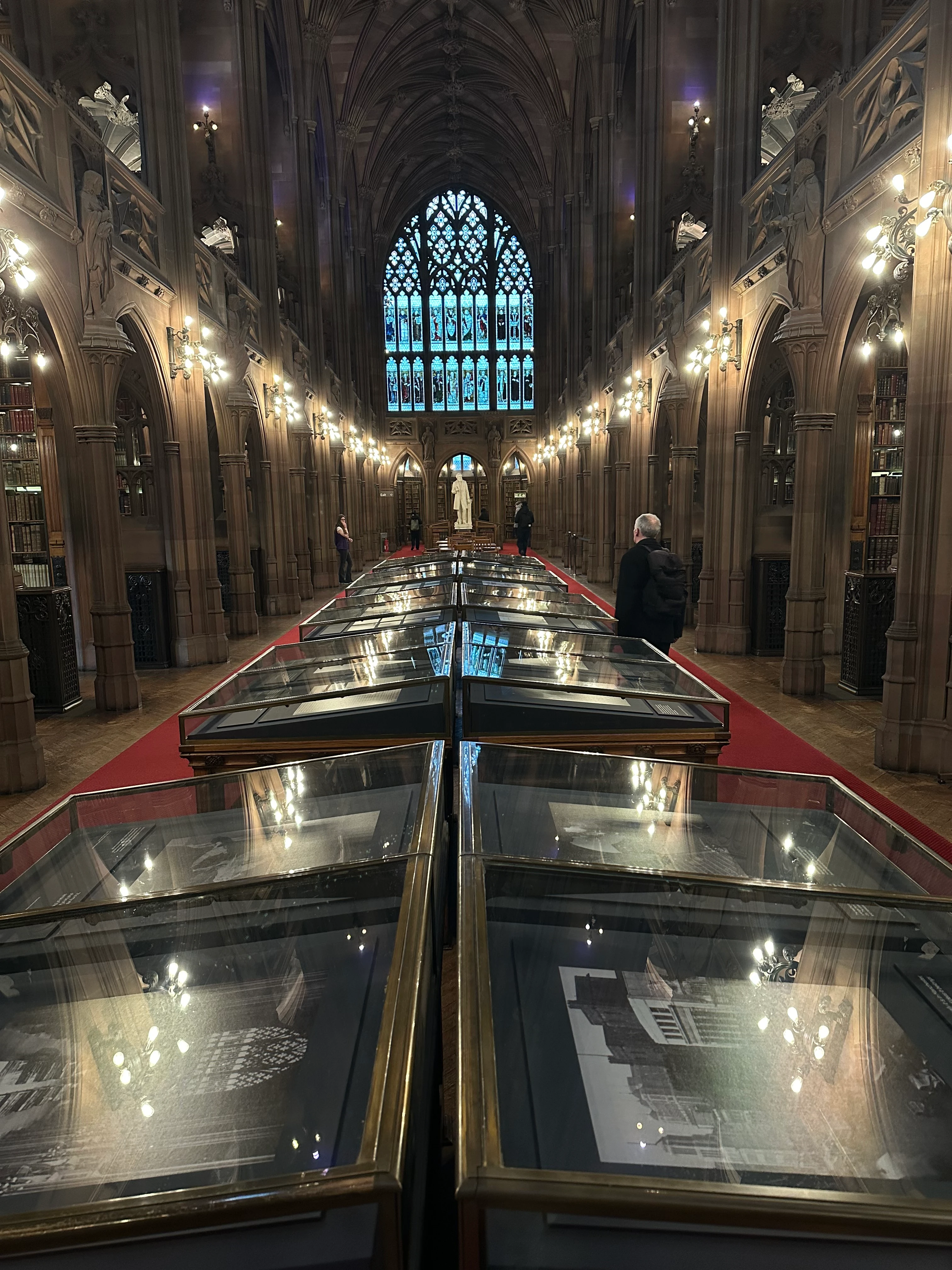
- Afternoon: visit the John Rylands Library on Deansgate, a short walk from the top of the area, and then continue into the centre for shopping or the city’s other sights.
- Evening: if you want a canalside drink, go back to the basin as the light fades.
Going back for an evening drink is the better option if you did the walk in the morning, because the area looks quite different at dusk, with lit bars and reflections on the water.
This plan works because the stops are close. You spend more time looking and less time on trams or in taxis, which matters when you only have a day or two in the city.
What to skip: if your visit is short, you do not need to do everything in Castlefield. The canal walk and the fort are the highlights. The museum and any events are optional extras, so add them only if they interest you and you have the time.
Where to stay if you want Castlefield on your doorstep
Staying close to Castlefield puts you near the canal, the Deansgate-Castlefield tram stop and Deansgate itself. You can walk to the basin for a drink in the evening without needing transport, and you are within reach of the centre in the morning.
Some trade-offs to weigh up. Hotels near the canal can be livelier at weekends, because the bars draw crowds, so check room position and reviews if you want a quiet night. Hotels further into the centre may suit you better if shopping and nightlife in the city proper matter more than the waterside setting.
The right choice depends on your trip: a short city break, a family visit or something more relaxed will each point to a different part of town. Choosing where to base yourself? See our picks in The 5 Best Hotels in Manchester, Picked by the Kind of Trip You’re Planning.
Leave a Reply